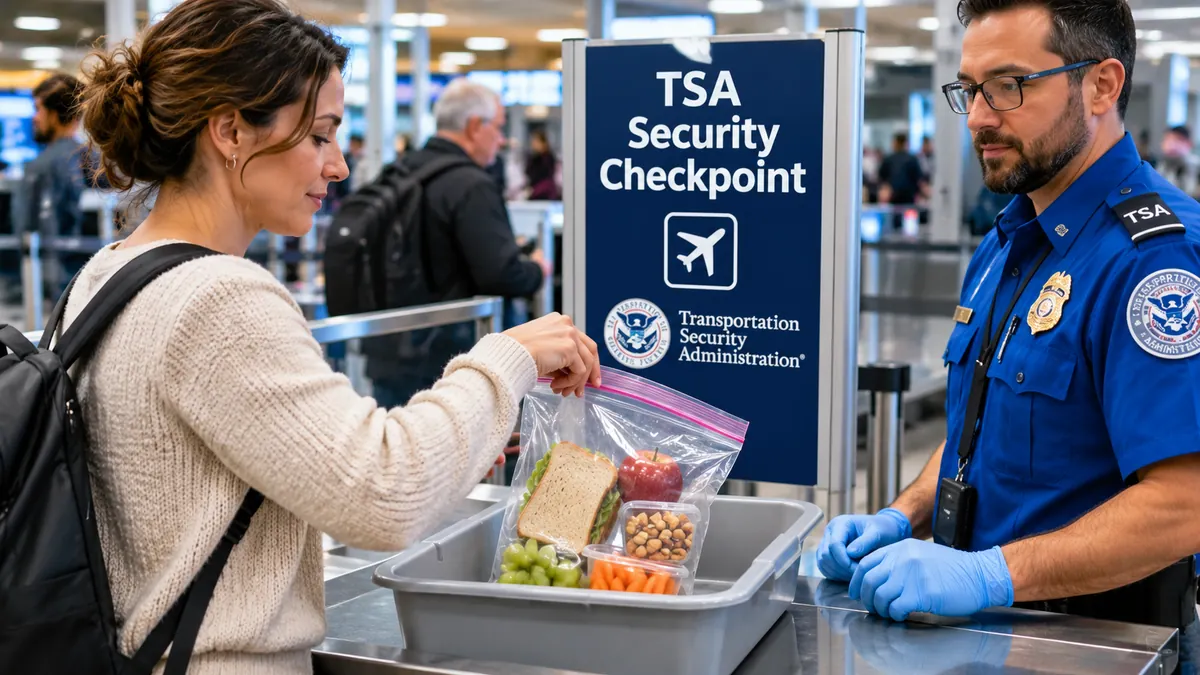
Yes, you can bring food through TSA. Solid foods such as sandwiches, snacks, cooked turkey, rolls and most pies can go in your carry-on, but gravy, cranberry sauce, dips and other pourable or spreadable foods must follow the 3.4-ounce (100 mL) liquids limit. Larger containers belong in checked baggage. (What Can I Bring? Food) (What Can I Bring? Complete List)
It’s an easy distinction to miss when you’re bringing your best dish to a family dinner. A pumpkin pie can travel with you, yet the sauce intended to accompany the turkey may need a different bag. Here’s how to pack the meal, or just your snacks, before you reach the airport checkpoint.
What Thanksgiving foods can go in your carry-on?
Solid foods generally can go through TSA screening in either a carry-on or a checked bag. TSA’s searchable list allows bread, candy, pies and cakes. Its broader food guidance also permits solid food while warning that officers may request additional screening.
| Thanksgiving food | Carry-on guidance | Packing note |
|---|---|---|
| Cooked turkey or ham | Generally allowed as solid food | Keep perishable meat cold and leakproof |
| Dinner rolls and bread | Allowed | Use a crush-resistant container |
| Pies, cookies and cakes | Allowed | Expect possible extra inspection |
| Dry stuffing mix | Generally allowed as solid food | Leave the ingredient label accessible |
| Cooked stuffing and solid casseroles | Generally allowed if substantially solid | Soupy preparations may be treated as liquids |
| Whole fresh fruit and vegetables | Generally permitted for domestic travel within the continental U.S. | Destination agricultural rules may differ |
| Solid candy and snacks | Allowed | Make the bag easy to inspect |
A big tray of macaroni and cheese or a pan of stuffing may fit the definition of solid food, but its shape, added sauce and packaging still matter. TSA officers make the final screening determination at the checkpoint. A food that is permitted under security rules must also meet your airline’s carry-on size and weight limits.
Can you bring snacks or a sandwich through TSA?
Yes. Chips, crackers, granola bars, candy, fruit and a packed sandwich are solid foods, so they can go in your carry-on. The catch is anything wet that comes with them: yogurt, hummus, salsa, peanut butter and dressing count toward the liquids limit when the container is over 3.4 ounces.
Our advice: pack snacks in one pouch near the top of your bag, so you can take them out quickly if an officer asks. If you want a dip, use a small container that fits in your quart-size liquids bag.
Can you bring gravy or cranberry sauce through TSA?
Yes, but in a carry-on, gravy and cranberry sauce must be in containers of 3.4 ounces (100 mL) or less, inside your quart-size liquids bag. TSA’s list sets that limit for gravy; cranberry sauce has no entry of its own, but as a spreadable food it falls under the same liquids rule (our reading). Larger quantities belong in checked luggage.
The key isn’t whether something is homemade or sealed in a factory container. The relevant distinction is its consistency. Items that pour, spread or behave like a gel are subject to liquid restrictions. A sealed jar of cranberry sauce isn’t automatically exempt, nor is a bowl of gravy that has thickened in the refrigerator.
Jam, preserves, maple syrup, dips and similar condiments can cause the same problem. A good rule at home: if you’d serve it with a spoon because it flows or spreads rather than holds its shape, check the TSA item-specific guidance before putting a full-size container in your carry-on. Our TSA liquids rule guide explains how the quart bag works.
Can you bring turkey, stuffing and leftovers on a plane?
Generally yes: solid cooked foods are permitted through TSA screening, but permission to pass security is not a guarantee that the food will remain safe to eat. Perishable turkey, stuffing and many cooked side dishes require refrigeration at 40°F (4°C) or below, according to U.S. government food-safety guidance. (4 Steps to Food Safety)
That means planning beyond the time of the flight. Count the drive to the airport, security line, boarding delay, flight, baggage claim and trip to your destination. A few hours at room temperature in a shopping bag could spoil a carefully prepared dish.
Use a well-insulated cooler or food bag with cold packs and a thermometer where practical. FoodSafety.gov advises keeping perishables chilled and limiting unrefrigerated time to two hours, or one hour above 90°F (32°C). Refrigerate promptly on arrival instead of leaving food on the kitchen counter until dinner. (Seasons Change, but Food Safety Steps Shouldn't) Once you’re there, our guide to how long leftovers are good for tells you when to eat or toss them.
Can you take a frozen ice pack through airport security?
Yes, frozen liquid and gel packs can go through TSA screening when they are completely frozen solid. If they are partly melted, slushy or contain liquid at the bottom when screened, the usual liquids restrictions apply; TSA lists specific exceptions for medically necessary items.
Freeze the packs thoroughly the night before your trip, place them around your chilled food, and avoid opening the cooler unnecessarily. A frozen gel pack is not a substitute for checking the food’s actual temperature. Choose a container that will still fit the airline’s permitted cabin baggage allowance.
If maintaining a safe temperature for a long journey is unrealistic, consider preparing the dish after arrival or arranging another safe transport method. It’s better to bring the recipe than food that spent half a day getting warm.
Can you bring sealed food through TSA?
Yes, sealed solid food is usually permitted, but factory sealing does not override restrictions on liquids, gels or canned items. TSA notes that certain canned foods may prompt additional examination because of their contents or how they appear during X-ray screening.
Pack jars and fragile containers so they won’t leak or break. Put full-size liquids and spreadable foods in checked luggage, but remember checked baggage also experiences delays and temperature changes. Never assume the cargo hold provides refrigeration.
For any item that seems borderline, such as an unusually wet casserole, a canned dessert or a jar of pumpkin filling, look it up in TSA’s official What Can I Bring? list rather than relying on a social media graphic.
How should you pack food to get through TSA faster?
Pack food so you can remove it quickly if an officer asks to inspect it. TSA may request separate screening for food, powders and bulky containers that make X-ray images harder to read.
A simple approach works best:
- Put pies or other fragile dishes in a rigid, clean container with a secure lid.
- Seal cooked meats separately from ready-to-eat foods to prevent leaks and cross-contamination.
- Keep solid foods accessible instead of burying them beneath electronics and shoes.
- Place compliant small sauce containers in your liquids bag; pack larger sauces in checked luggage.
- Confirm cooler dimensions, carry-on allowance and baggage fees with the airline.
- Check the rules again shortly before departure; TSA officers have final authority at screening.
For another common holiday packing problem, our carry-on luggage size guide explains why bag dimensions matter separately from TSA screening.
Does the same rule apply to international flights?
No single TSA approval covers every destination’s food-import rules. TSA screening answers what can pass a U.S. security checkpoint; a foreign destination, U.S. territory or state with agricultural restrictions may have separate rules governing meat, produce and other foods.
Before traveling internationally, check the destination customs and agricultural authority as well as the airline. This guide is intended primarily for domestic U.S. flights. A Thanksgiving leftover that passes security can still be restricted at your destination.
Our advice: decide by consistency, then by food safety
Turkey, rolls, sandwiches, snacks and pie are the straightforward choices for carry-on travelers. Gravy, cranberry sauce and other spreads are easier to check, make after arrival or divide into TSA-compliant small containers. Keep perishable dishes genuinely cold from kitchen to destination, not merely cold at the moment you leave home.
Last reviewed November 11, 2026. This is a guide to existing TSA food rules prompted by holiday travel interest, not a report that TSA introduced a new Thanksgiving ban.
Sources & method
Who this guide is for
This guide is for U.S. domestic airline passengers bringing snacks, homemade Thanksgiving food, holiday leftovers or food gifts through airport security.
How we researched this
- This is a research-based guide, not a hands-on product test.
- Every measurement and safety figure is attributed to the source it comes from. Where we give our own advice, we say so.
- We don’t rank or recommend specific products in this guide.
Sources
- Transportation Security Administration — What Can I Bring? Food (accessed Nov 11, 2026). Primary carry-on/checked-food rules, solid versus liquid or gel items, and additional screening.
- Transportation Security Administration — What Can I Bring? Complete List (accessed Nov 11, 2026). Item-level entries for gravy (3.4 oz in carry-on), pies and cakes, bread (liquid or gel food over 3.4 oz not allowed in carry-on), ice and gel packs, and canned food.
- FoodSafety.gov (U.S. government) — 4 Steps to Food Safety (accessed Nov 11, 2026). 40 F refrigeration, two-hour rule and safe handling of perishables.
- FoodSafety.gov (U.S. government) — Seasons Change, but Food Safety Steps Shouldn't (accessed Nov 11, 2026). Use a thermometer and insulated cooler for food in transit.
Review history
- Published Nov 11, 2026.