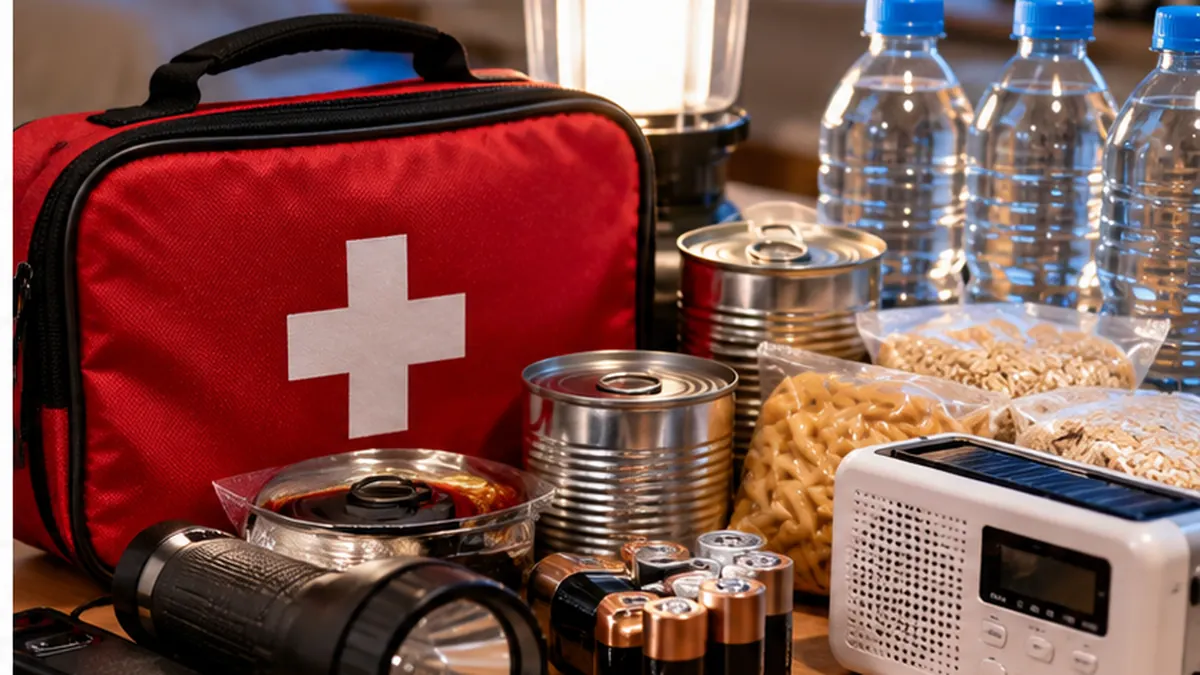
A power outage emergency kit needs flashlights, spare batteries, charged phones and power banks, drinking water, food that needs no cooking, a manual can opener, essential medicines, a first-aid kit and a cooler with ice. Put it together before the storm, when stores are open and roads are safe; a plan matters more than an expensive gadget. (Food Safety in a Disaster or Emergency) (What to Do to Protect Yourself During a Power Outage)
Searches for power outage kits jump every November and stay high through January, when winter storms and high winds bring down trees and power lines. When the National Weather Service issues a wind or winter storm watch for your area, that is the signal to check the list below. A watch means outages are possible, not that they will happen, so keep following your local forecast.
What should you do before a power outage?
Start with the supplies and information you already have, then close the gaps that matter for your household. The following checklist covers lighting, communication, food, water, medicines and safe heat without assuming the power will definitely fail.
| Before the storm | Practical action |
|---|---|
| Information | Save your utility’s outage reporting page and your National Weather Service local forecast |
| Light | Find battery-powered flashlights or lanterns; test batteries |
| Communication | Fully charge phones, essential devices and existing power banks |
| Food | Check the fridge is 40°F or below and the freezer is 0°F or below |
| Water | Set aside potable water for drinking, cooking and hygiene needs |
| Home | Secure loose outdoor objects like patio furniture and trash cans while it’s still safe |
| Medical needs | Make a backup plan for electrically powered equipment and temperature-sensitive medication |
| Safety | Check smoke and carbon-monoxide alarm batteries and know how to seek help |
Our advice: don’t climb a ladder or work beneath trees once strong winds begin. Anything you didn’t secure in time can wait.
What goes in a power outage emergency kit?
A useful power outage kit begins with lighting, batteries, charged communication devices, drinking water and essential medicines, not with a particular brand. A simple kit may already be mostly assembled in your home.
Keep a flashlight where it can be found in the dark, not buried in the garage. Include spare batteries that fit the device, a battery-powered radio if you own one, a basic first-aid kit, manual can opener and food that does not need cooking or refrigeration. If you have pets or infants, include their supplies as well.
Portable chargers can help keep a phone running, but check their capacity and charge them before the weather deteriorates. For households with electrically powered medical devices, contact the equipment provider and local utility about backup planning rather than assuming a consumer power bank can safely run medical equipment.
Don’t purchase a generator or other fuel-burning device on the assumption that bigger is always safer. Any backup electrical system requires proper installation, compatible power demands and strict carbon-monoxide precautions.
How long will refrigerator food stay safe without power?
An unopened refrigerator keeps food cold for about four hours, according to FoodSafety.gov. A full freezer can hold its temperature for roughly 48 hours; a half-full freezer, about 24 hours, as long as the doors stay closed.
These are general planning windows, not permission to ignore actual food temperatures. Appliance thermometers are useful because you can check the refrigerator and freezer when power returns. U.S. guidance advises keeping the refrigerator at 40°F (4°C) or colder and the freezer at 0°F (-18°C) or colder.
Discard refrigerated perishable foods such as meat, poultry, fish, eggs and leftovers after four hours without power. Frozen food that still contains ice crystals or measures 40°F or colder can be safely refrozen, although quality may decline. Use FoodSafety.gov’s item-by-item charts for borderline cases. (Food Safety During Power Outage)
A dangerous mistake is tasting a questionable dish to decide whether it’s safe. FoodSafety.gov says never to taste food to determine its safety after an outage. When you can’t establish that perishable food stayed safe, discard it.
How can you keep food cold during a long outage?
Prepare ice and cold storage before electricity fails. Freeze containers of water and gel packs, make extra ice if you have freezer space, and locate a cooler large enough to hold your most important perishables. Grouping freezer items together helps them stay cold longer.
Once an outage begins, keep the refrigerator and freezer closed unless you genuinely need to open them. If the interruption will last longer than the refrigerator’s safe window, transfer food to a cooler with enough ice to keep it at 40°F or below. Use a thermometer rather than guessing by touch.
Our advice: freezing temperatures outdoors don’t turn a porch into a reliable refrigerator. Sunlight and changing weather can warm food unevenly. Similarly, an unplugged refrigerator isn’t an icebox indefinitely; a warm room may shorten the time before perishable food needs to be thrown away.
If you might have to drive during the storm, our winter car emergency kit guide covers supplies for drivers who get stranded.
Can you use a generator safely during a power outage?
Only operate a portable fuel-powered generator outdoors, more than 20 feet away from windows, doors and vents. The Centers for Disease Control and Prevention warns never to use a generator inside a home or garage, even if doors and windows are open, because carbon monoxide (CO) can build up to deadly levels. (Carbon Monoxide (CO) Poisoning Basics)
Never run generators, gasoline-powered equipment, charcoal grills or camping stoves inside a home, basement or garage. Never use a gas range or oven to heat a home. When using a generator, keep a battery-powered or battery-backup CO detector in the house, and follow the generator manufacturer’s electrical and fuel-handling instructions. Our guide to carbon monoxide detector placement shows where alarms belong.
Our advice: portable generators must not be connected to home wiring through a wall outlet. Any connection to building circuits needs appropriate equipment installed by a qualified electrician to prevent dangerous backfeed and protect utility workers. If you don’t have a safe generator setup, use battery-powered light and seek a powered location for essential needs instead.
What if a power outage affects heat, medication or medical devices?
If someone depends on electricity for a medical device, plan a backup with their healthcare team and equipment supplier before the outage. Ask how long the device’s approved backup power lasts, and identify a safe alternative location with electricity. Do not improvise with incompatible batteries, generators or wiring.
Some medicines require refrigeration. The CDC says to throw away medication that should be refrigerated when the power has been out for a day or more, unless it is life-saving and no new supply is available yet; ask a pharmacist or doctor as soon as you can. Keep essential contact details written down in case the phone battery or network fails.
People who cannot stay warm safely should arrange assistance early. Prioritize safe shelter over trying to stay comfortable with unvented heaters or stoves. If you do use an electric space heater once power returns, read our space heater safety guide first.
What should you do when the power actually goes out?
First check whether the outage is limited to your home, report it to the utility and stay away from downed power lines. Use flashlights rather than open flames when possible, and don’t drive through areas with fallen trees or electrical wires.
Unplug sensitive electronics when appropriate and keep a flashlight handy. Monitor official utility updates and local National Weather Service warnings. If you must leave home, bring your medicines, warm clothing, essential documents and pets, and tell someone where you’re going.
Avoid opening the refrigerator just to see how the food is doing. A closed door keeps the cold air in. After power returns, use food temperature readings and federal disposal charts rather than assuming everything is safe because the lights are back on.
Our advice: build the kit now, act on your local forecast
Keep the essentials ready before the wind arrives, then adjust to the latest official information for your area. Most of a good kit is already in your home: gather it in one place, charge what needs charging, and fill the gaps while the weather is calm.
Last reviewed November 11, 2026.
Sources & method
Who this guide is for
This guide is for U.S. households preparing for weather-related power interruptions, especially before winter storms and high-wind events.
How we researched this
- This is a research-based guide, not a hands-on product test.
- Every measurement and safety figure is attributed to the source it comes from. Where we give our own advice, we say so.
- We don’t rank or recommend specific products in this guide.
Sources
- FoodSafety.gov (U.S. government) — Food Safety in a Disaster or Emergency (accessed Nov 11, 2026). Fridge about 4 hours, freezer 24–48 hours, appliance thermometers, frozen water containers and gel packs.
- Centers for Disease Control and Prevention — What to Do to Protect Yourself During a Power Outage (accessed Nov 11, 2026). Generators 20 ft from windows, doors and vents; CO detector; no gas oven for heat; refrigerated medicine.
- Centers for Disease Control and Prevention — Carbon Monoxide (CO) Poisoning Basics (accessed Nov 11, 2026). Never run generators indoors or in a garage, even with doors open; more than 20 ft from windows, doors and vents.
- FoodSafety.gov (U.S. government) — Food Safety During Power Outage (accessed Nov 11, 2026). Discard perishables after 4 hours; refreeze food with ice crystals or at 40°F or below; never taste food to check it.
Review history
- Published Nov 11, 2026.